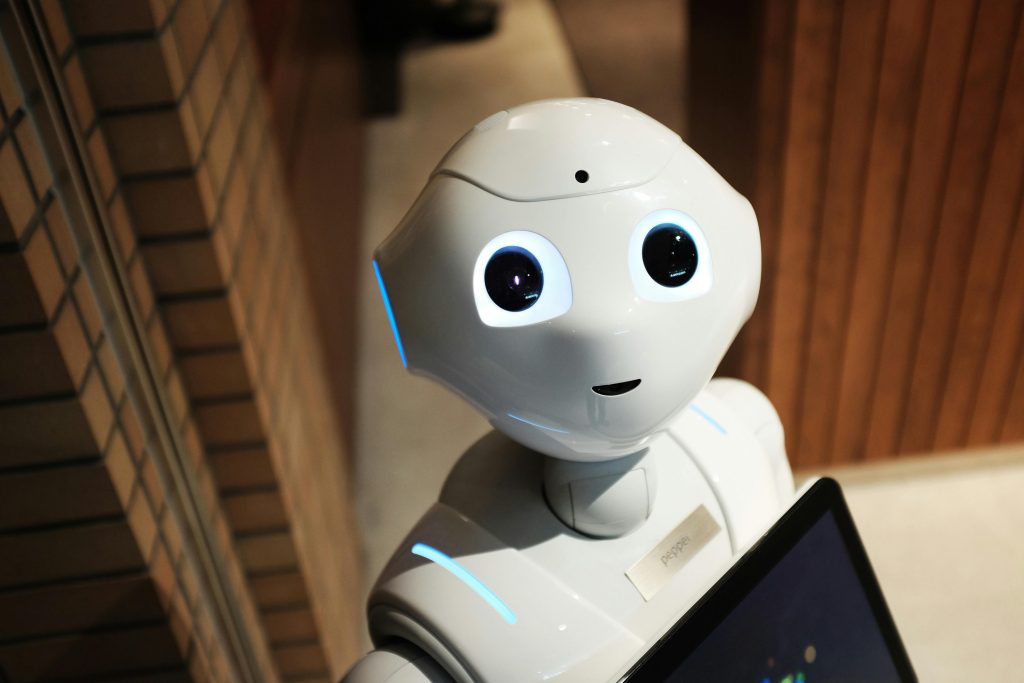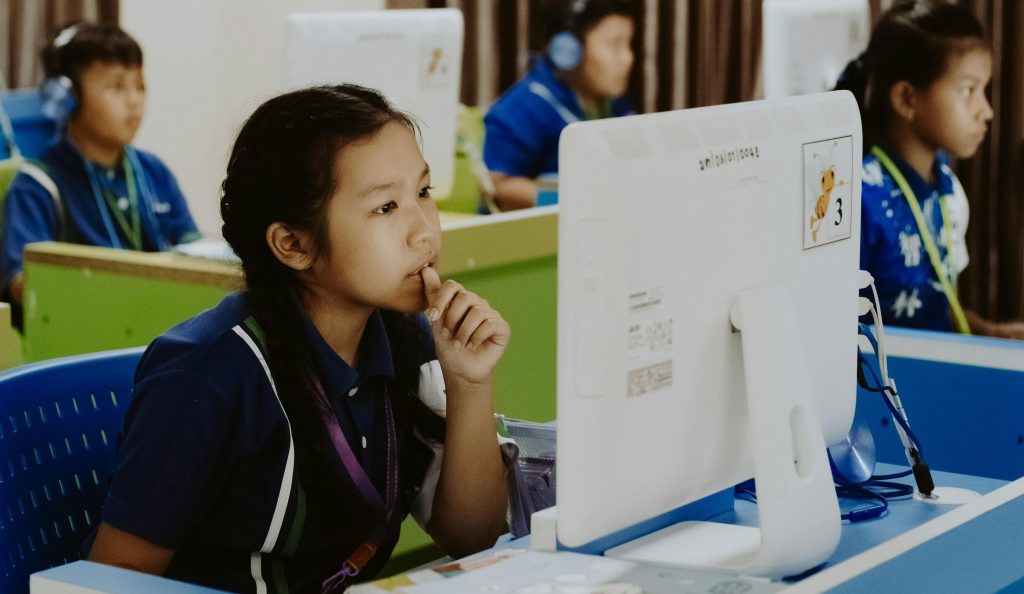
For more than a decade, the narrative in education seemed straightforward. More technology meant better learning. Classrooms filled with tablets, laptops and digital dashboards were seen as symbols of progress. Schools proudly announced one-to-one device programs and parents were assured that coding lessons and AI tools would prepare children for the future.
But something interesting is happening.
Across the world, educators are beginning to quietly ask a difficult question. What if the tech revolution in classrooms has gone too far?
From Scandinavia to Australia, schools are rebalancing their approach. Devices are being limited. Handwriting and printed books are making a comeback. Even some of the most enthusiastic technology advocates are beginning to argue that learning might require more analogue experiences than we assumed.
This shift is not about rejecting innovation. Rather, it reflects a deeper rethink driven by new research, rising concerns about child development and the rapid arrival of artificial intelligence in the classroom. The result is a growing movement toward what might be called “mindful technology” in education.
For leaders, parents and professionals watching these changes unfold, the implications are significant. The classroom is becoming a testing ground for a broader societal question. How do we harness powerful technology without allowing it to quietly reshape our brains, behaviour and expectations in ways we never intended?
Here are five emerging trends shaping the new balance between technology and analogue learning.
1. The analogue comeback
For years, many education systems raced to digitise classrooms. Tablets replaced textbooks and interactive screens replaced whiteboards. But a growing body of evidence suggests the learning benefits were far less impressive than promised.
In fact, large international studies from the OECD found that countries investing heavily in classroom technology often saw declines in literacy, numeracy and science outcomes rather than improvements.¹
These findings have prompted some governments to rethink their approach. Sweden, once one of the earliest adopters of digital learning tools, has begun reversing course by reinvesting in printed textbooks and traditional learning materials after concerns about declining academic performance.²
The shift is also happening at the classroom level. Teachers increasingly report that students concentrate better when reading physical books and writing by hand. Education researchers argue that digital devices, when overused, can fragment attention and reduce the sustained focus required for deep learning.³
The implication is not that digital tools are useless. Rather, they are simply not the silver bullet many once believed.
For schools and organisations, the lesson is broader than education. Technology should enhance human capability, not replace the cognitive processes that build it. Sometimes the smartest innovation is reintroducing what worked before.
Professionals working in education or learning design should ask a simple question when evaluating new tools. Does this technology deepen thinking, or merely make the process faster?
2. The screen-time generation arrives at school
Teachers are noticing something else that would have been almost unimaginable a decade ago. Many children arriving at school struggle with basic physical and cognitive skills.
A January 2026 survey of 1,000 primary school staff in England found that 28 per cent of five-year-olds could not use books correctly, with some even attempting to swipe pages like a phone screen. More than half of the teachers surveyed said excessive screen time played a significant role in declining school readiness.⁴
This observation aligns with a growing body of neuroscience research examining how early screen exposure shapes developing brains.
A 2025 longitudinal study in Singapore found that higher screen exposure before the age of two predicted accelerated but inefficient development in brain networks associated with visual processing and cognitive control. Children exposed to greater screen time showed slower decision making at age eight and higher anxiety by adolescence.⁵
Even three to four hours of daily screen exposure was enough to produce measurable effects.
A broader meta analysis of 34 studies also found links between excessive screen use and reduced attention span, impaired executive function and observable changes in brain regions associated with learning and memory.⁶
None of this means screens are inherently harmful. But it does suggest that developing brains need a diverse range of experiences including reading, movement, play and face-to-face interaction.
The practical takeaway for educators and parents is surprisingly simple. Old-fashioned habits still matter. Frequent parent child reading has been shown to counter some of the negative cognitive effects linked to early screen exposure.⁵
In other words, sometimes the most advanced strategy for cognitive development looks suspiciously like what grandparents used to recommend.
3. The AI homework dilemma
If screens created one challenge for schools, artificial intelligence has introduced a far bigger one.
AI chatbots have quickly become a standard part of student life. A Pew Research study released in February 2026 found that 54 per cent of American teenagers now use AI chatbots for schoolwork, with one in ten saying they rely on them for most or all of their assignments.⁷
Perhaps more concerning, 59 per cent of teens believe AI cheating is a regular occurrence at their school, rising to 76 per cent among students who already use chatbots for homework.
The impact on learning itself may be even more significant.
Research highlighted in recent reporting on AI and education suggests that heavy reliance on AI writing tools can significantly reduce cognitive engagement during learning tasks.⁸ Students who outsource thinking to algorithms may complete assignments faster but retain far less understanding.
Yet despite these concerns, AI tools are rapidly being integrated into education systems. Technology companies are introducing AI assistants into classroom platforms, while governments are beginning to include AI literacy as part of standard curricula.⁸
The challenge is not access to AI. It is ensuring that AI assists learning rather than replacing it.
One education commentator captured the dilemma with a striking analogy. Asking students to self regulate AI use during homework may be a little like asking a gambling addict to make wise choices inside a casino.
The solution likely lies in redesigning assessments and classroom practices so that AI becomes a thinking partner rather than a shortcut.
For educators and professionals designing learning experiences, the key question becomes this. How do we use AI to expand curiosity rather than outsource cognition?
4. The rise of “mindful tech” classrooms
Faced with these challenges, many schools are not abandoning technology. Instead they are adopting a more deliberate and balanced approach sometimes described as “mindful tech”.
This philosophy recognises that digital tools can be valuable when used intentionally but harmful when used automatically.
Some schools are introducing device-free periods during the day to encourage deep reading, conversation and collaborative problem solving. Others are using digital tools selectively for tasks such as simulations or research rather than continuous screen exposure.⁹
At the same time, educators and parents are becoming more cautious about the influence of large technology companies within education systems. Critics argue that classrooms have become a testing ground for digital platforms whose long-term impact on learning remains uncertain.¹⁰
This caution is also emerging in policies around student safety. For example, St Hilda’s Anglican School in Western Australia recently removed identifiable student images from public social media due to growing concerns about AI generated deepfakes and image manipulation.
The broader implication is that digital literacy increasingly includes understanding when not to use technology.
For organisations outside education, this trend mirrors a wider cultural shift. As technology becomes more powerful, intentional use becomes more important.
The real competitive advantage may lie in knowing when to unplug.
5. The rediscovery of focus
Perhaps the most important trend emerging from this classroom reset is the rediscovery of something modern life has quietly eroded: Focus.
Many educators believe that the rapid stimulus switching common in digital content may be conditioning young brains to expect constant novelty. Fast cuts, notifications and algorithmic feeds reward brief attention rather than sustained concentration.
But deep learning requires exactly the opposite. Reading complex material, solving difficult problems and writing thoughtful arguments all depend on the ability to maintain focus for extended periods. It is a skill that must be practised and strengthened.
This is one reason printed books, handwriting and extended discussion are returning to classrooms.
The concern among some researchers is that the next generation could become the first in modern history to display lower cognitive capability than their parents. Some analysts argue that cognitive performance has stagnated or declined in parts of the developed world since around 2010, coinciding with the rise of smartphones and always-on digital environments.³
The good news is that attention is trainable. Activities such as reading, discussion, outdoor play and time in nature help rebuild cognitive endurance and restore the mental stamina required for learning.
For professionals across industries, the lesson extends far beyond classrooms. In a world of constant distraction, the ability to focus deeply may become one of the most valuable skills of all.
Conclusion: Finding balance in the digital classroom
Technology is not disappearing from classrooms. If anything, it will continue to expand.
Artificial intelligence, immersive simulations and adaptive learning platforms will all play an increasing role in education over the coming decades. But the enthusiasm that once surrounded classroom technology is now being tempered by experience and evidence.
The emerging lesson is not that technology is harmful, but that learning is deeply human.
Children need conversation, movement, reading, play, curiosity and sustained attention. Digital tools can support these experiences, but they cannot replace them.
The schools now leading the way are not the ones with the most screens. They are the ones asking smarter questions about when technology helps and when it quietly gets in the way.
For parents, educators and leaders watching this shift unfold, the message is clear. The future of education will not be fully digital or fully analogue.
It will be deliberately balanced.
And in an age obsessed with innovation, that might turn out to be the most innovative idea of all.
Michael McQueen is a trends forecaster, change strategist and award-winning conference speaker.
He features regularly as a commentator on TV and radio and is a bestselling author of 10 books. His most recent book Mindstuck explores the psychology of stubbornness and how to change minds – including your own. Find out more here.
To see Michael speaking live, click here.
For more information on Michael’s keynote speaking topics, click here.
References
- OECD. Students, Computers and Learning: Making the Connection.
- Spartan Shield. “Sweden scales back on the use of digital tools in schools.”
- Nicholas Carr. “Screens in schools have been a catastrophic failure.” The Spectator.
- The Guardian. “Children starting school without basic skills, teachers warn.”
- Frontiers in Psychology. (2025). Longitudinal research on early screen exposure and brain development.
- ABC News. “Research finds screen time and video games linked to social problems.”
- Pew Research Center. (2026). How teens use and view AI.
- TIME Magazine. “How AI tools like ChatGPT are changing how students learn.”
- The Guardian. “Schools are using screens in a mindful way.”
- The Guardian. “Big Tech and the classroom: are parents right to worry?”