The future of privacy has arrived quietly, woven into our daily routines so seamlessly that most of us barely notice how much of ourselves we are giving away. Workplaces, cars, shops, neighbourhoods and even our own devices are now part of a growing ecosystem of surveillance reshaping how we live and work. This shift is being fuelled by rapid advances in technology, a cultural appetite for convenience and personalisation and a regulatory system still scrambling to catch up. For leaders, employers and professionals, the message is clear. These changes are accelerating and recognising them early is essential.
1. Worker Monitoring Is Becoming Everyday
Digital oversight has become surprisingly normal. Employers are now using everything from Microsoft Teams’ new location tracking to keystroke loggers, webcams and GPS tools. Around two-thirds of companies use at least one form of monitoring. What started as a temporary pandemic solution has evolved into an everyday feature of remote and hybrid work.
The issue is not legality. Most of this is legal because Australia’s workplace privacy laws are years behind the technology. The issue is trust. When people feel watched, the home office can start feeling like an open-plan cubicle with better lighting. Some states are finally starting to consider tighter rules around what employers can reasonably track, but the cultural impact is already here. Teams perform better when trust is high and surveillance rarely builds trust.
2. Cars Are Becoming Data Factories
Modern vehicles are now data-hungry machines. A typical car produces about 200GB of data per hour and vehicles with advanced driver-assist or autonomous capabilities can generate up to 1.4TB in the same timeframe. They record where you drive, how you brake, how fast you take corners, the tone of your voice commands and even how you interact with the entertainment system.
Employers are increasingly tracking staff in work vehicles and sometimes after hours. Manufacturers are collecting even more. One major carmaker was caught storing and sharing photos and videos recorded inside customer vehicles. This wasn’t a technical glitch. It was a glimpse into just how much visibility companies now have into our personal lives. Cars used to be private spaces. Now they are mobile data centres and most drivers have little idea what is being captured, where it goes or who can access it.
3. Facial Recognition Is Moving Into Everyday Life
Once a futuristic idea, facial recognition has slipped quietly into daily routines. Several major Australian retailers were found to be scanning customer faces in-store without proper consent. The Privacy Commissioner ruled it illegal, setting a major precedent.
Yet the technology continues to spread. In parts of the United States, you can already board a plane with a face scan instead of a boarding pass. Many stadiums use it to manage crowds and security. One fast-food chain even used facial recognition to identify hungover customers and offer them discounts, which is either clever marketing or a sign we have overcorrected on personalisation.
Public sentiment is shifting fast. More than half of Australians say facial recognition in retail feels like an invasion of privacy. The technology is moving faster than public comfort and far faster than updated regulations.
4. Cameras Are Everywhere and the Idea of Public Space Is Changing
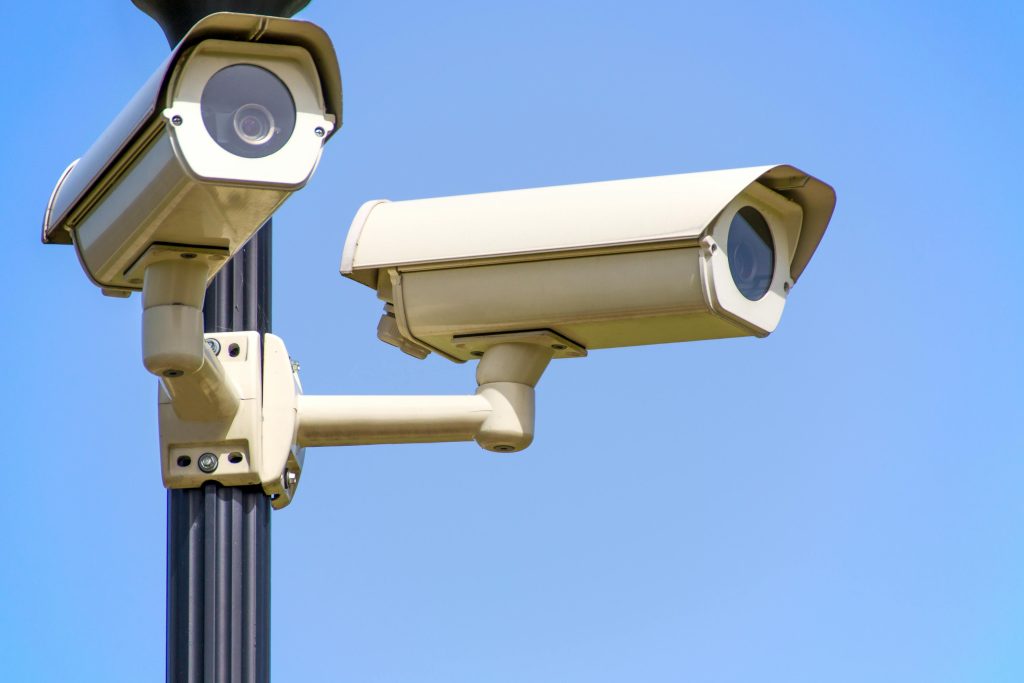
CCTV used to belong to governments and shopping centres. Today, anyone with a doorbell camera or home security system is contributing to a rapidly expanding layer of community surveillance. We are filmed dozens of times a day. Sydney has roughly one camera for every 80 residents. London has one for every 13. In Shanghai and Beijing, it is one for every two people.
Doorbell footage that once lived on a small local device now sits in cloud databases managed by large tech companies. Overseas, police have increasingly requested access to this footage, raising complicated questions about consent, ownership and the rights of people captured incidentally while simply walking past.
The line between safety and surveillance is getting thinner and many people do not realise how visible their everyday movements have become.
5. The Debate Over Whether Our Devices Are Listening
Ask almost anyone whether their phone is listening to them and you will hear the same story. They mention a product once and find it following them around the internet shortly after. Tech companies insist they are not using phone microphones to target ads. Yet public suspicion is growing and the stories keep multiplying.
Whether microphones are involved or not, voice is becoming the next frontier of data capture. Smart speakers, phones, watches, TVs and cars are equipped with microphones that are always partially awake, listening for wake words. Every new layer of surveillance, from face to movement to voice, generates highly sensitive personal data and individuals have very little control over how long it is kept or who it is shared with.
Hyper-personalisation may be convenient, but many are beginning to question the cost.
Conclusion: The Choices We Make Now Matter Most
Taken together, these five trends show a world moving rapidly toward deeper monitoring and a growing tension between convenience and control. The benefits are real. Better safety, smoother travel, more personalised services and more efficient workplaces. The challenge is finding balance.
Surveillance becomes harmful when it is invisible, unregulated or unchecked. The real issue is consent. Not the tick-a-box kind but genuine, informed consent where people understand what is being collected and why.
This moment calls for curiosity rather than complacency. For leaders, it means being transparent and thoughtful about how monitoring technologies are used. For governments, it means updating laws at the speed of technology rather than the speed of bureaucracy. For individuals, it means paying attention.
The future of privacy will not be defined by the technology itself but by the choices we make about it. We can embrace innovation without surrendering autonomy. We can enjoy convenience without forfeiting trust. The question is not whether surveillance will grow. It is how intentionally we manage it so the future we build still feels like our own.
___________________________________________________
Michael McQueen is a trends forecaster, change strategist and award-winning conference speaker.
He features regularly as a commentator on TV and radio and is a bestselling author of 10 books. His most recent book Mindstuck explores the psychology of stubbornness and how to change minds – including your own. Find out more here.
To see Michael speaking live, click here.
For more information on Michael’s keynote speaking topics, click here.